

How To Clean Vents On A 2000 C2500 Pickup Truck

| Championship | File Size | Download Link |
| Mitsubishi Fuso Canter engine 4M40 Service Transmission.pdf | 3.2Mb | Download |
| Mitsubishi Body-equipment mounting directives for Fuso CANTER EURO 5 (FB-FE).pdf | 27.5Mb | Download |
| Mitsubishi Fuso Amble 4D3 diesel engine Workshop Manual.pdf | 11.9Mb | Download |
| Mitsubishi Fuso Canter engine 4M41 Service Manual.pdf | 2.5Mb | Download |
| Mitsubishi Fuso Engine 4m4 Service Transmission.pdf | 3.2Mb | Download |
| Championship | File Size | Download Link |
| 2006 Mitsubishi Fuso FE Series Engine - inspection and adjustment of Valve Clearence.pdf | 111kb | Download |
| Mitsubishi (Fuso) Engines.pdf | 36.6kb | Download |
| Mitsubishi 2010 Fuso FG Owner's Manual.pdf | xvi.9Mb | Download |
| Mitsubishi Fuso 1996-2001 Repair manual (FE, FG, FH, FK, FM).pdf | 242Mb | Download |
| Mitsubishi Fuso 2005 Service Manuals All Models (Iron, FG, FK, FM).pdf | 173.9Mb | Download |
| Mitsubishi Fuso 4M4 series diesel engine Service Transmission.pdf | 32.3Mb | Download |
| Mitsubishi FUSO Passenger vehicle Fault Codes Listing PDF.pdf | 105.6kb | Download |
| Mitsubishi Fuso Engine 4D56, 4M41 Service Repair Manual.pdf | 780.8kb | Download |
| Mitsubishi FUSO FE 2012 Owner's Manual.pdf | 18.1Mb | Download |
| MITSUBISHI FUSO FIGHTER 6M60 Engine Service Manual.pdf | 844.8kb | Download |
| Mitsubishi Fuso FK 2008 Possessor's Manual.pdf | 16.3Mb | Download |
| Mitsubishi Fuso FK,FM 2006 Possessor'southward Manual.pdf | 13.6Mb | Download |
| Mitsubishi Fuso Transmission - Trunk Builder'southward Drawings And Supporting Data.pdf | 6.5Mb | Download |

Mitsubishi Canter engine 4M40 Service Manual
Mitsubishi Canter engine 4M40 Service M
Adobe Acrobat Document three.2 MB
Mitsubishi Canter engine 4M41 Service Manual
Mitsubishi Canter engine 4M41 Service Ma
Adobe Acrobat Certificate 2.v MB
Mitsubishi FUSO Fe 2012 Possessor's Transmission
Mitsubishi FUSO FE 2012 Owner's Transmission.p
Adobe Acrobat Document 18.1 MB
Mitsubishi 2010 Fuso FG Possessor's Transmission
Mitsubishi 2010 Fuso FG Owner's Manual.p
Adobe Acrobat Document 16.9 MB
Mitsubishi Engine 4m4 Service Manual
Mitsubishi Engine 4m4 Service Manual.pdf
Adobe Acrobat Document 3.2 MB
MITSUBISHI FUSO FIGHTER 6M60 Engine Service Manual
MITSUBISHI FUSO FIGHTER 6M60 Engine Serv
Adobe Acrobat Document 844.eight KB
Mitsubishi Fuso FK 2008 Possessor'south Manual
Mitsubishi Fuso FK 2008 Owner's Manual.p
Adobe Acrobat Certificate 16.3 MB
Mitsubishi K3M Tractor Maintenance Manual
Mitsubishi K3M Tractor Maintenance Manua
Adobe Acrobat Document 28.9 MB
Mitsubishi MT180HD Repair Manual
Mitsubishi MT180HD Repair Manual.pdf
Adobe Acrobat Certificate 6.1 MB
Mitsubishi MT2100_210_2500_250 Parts catalog engine
Mitsubishi MT2100_210_2500_250 Parts true cat
Adobe Acrobat Document 3.half dozen MB
Mitsubishi Tractor Diesel fuel Engines Service Manual
Mitsubishi Tractor Diesel Engines Servi
Adobe Acrobat Document 5.two MB
Mitsubishi Fuso FK,FM 2006 Owner's Manual
Mitsubishi Fuso FK,FM 2006 Possessor's Manua
Adobe Acrobat Certificate 13.half dozen MB
Mitsubishi MT160-180 Repair Transmission
Mitsubishi MT160-180 Repair Transmission.pdf
Adobe Acrobat Document 5.6 MB
Mitsubishi MT2100_210_2500_250 Parts catalog chassis
Mitsubishi MT2100_210_2500_250 Parts cat
Adobe Acrobat Document x.v MB
Mitsubishi Tractor bd2g_bs3g Operators Manual
Mitsubishi Tractor bd2g_bs3g Operators K
Adobe Acrobat Document 1.9 MB
Mitsubishi Tractor Filter List
Mitsubishi Tractor Filter List.pdf
Adobe Acrobat Document 545.0 KB
| Title | File Size | Download Link |
| Mitsubishi 6D1 series diesel engine Workshop Manual.pdf | 13.6Mb | Download |
| Mitsubishi 6D22 Engine Service Manual.pdf | 37.1Mb | Download |
| Mitsubishi Forklift Diesel fuel Engine 4DQ5 Service Repair Manual.pdf | four.6Mb | Download |
| Mitsubishi Forklift Trucks 6M60-TL Diesel fuel Engine Service Manual.pdf | 26.3Mb | Download |
| Mitsubishi Forklift Trucks Fault Codes PDF.pdf | 103.9kb | Download |
| Title | File Size | Download Link |
| Mitsubishi K3M_K4M Tractor Maintenance Manual.pdf | 28.9Mb | Download |
| Mitsubishi MT160-180 Repair Manual.pdf | five.6Mb | Download |
| Mitsubishi MT180HD Repair Manual.pdf | 6.1Mb | Download |
| Mitsubishi MT2100_210_2500_250 Parts catalog chassis.pdf | 10.5Mb | Download |
| Mitsubishi MT2100_210_2500_250 Parts catalog engine.pdf | 3.6Mb | Download |
| Mitsubishi Tractor bd2g_bs3g Operators Manual.pdf | 1.9Mb | Download |
| Mitsubishi Tractor Diesel Engines Service Manual.pdf | 5.2Mb | Download |
| Mitsubishi Tractor Filter Listing.pdf | 545kb | Download |
History of Mitsubishi branOne of Japan's largest and oldest engineering corporations, Mitsubishi, is currently the third largest automobile manufacturer in the country and a leading truck manufacturer. Its roots get to the small-scale shipping company Tsukumo Shokai, founded in 1870 by Yataro Iwasaki. In March 1873, she received the now earth-famous name "Mitsubishi" and the emblem in the class of three diamonds. Past the outset of the 20th century, the visitor had become a big industrial dare that produced ships and diverse equipment.
In 1917, the shipbuilding co-operative of Mitsubishi Shipbuilding Co. from Kobe acquired in Italy a license for the product of a Fiat Nothing car. In Japan, he received the brand "Mitsubishi A". This model was the first in the country passenger car production. The following year, 7-1 trucks (thirty hp) were created for 2-iii tons, then produced in pocket-size batches for most 10 years. In 1924, the start Japanese dump trucks and watering vehicles were built on their chassis.
In 1920, a group for the production of internal combustion engines was separated from the shipbuilding department, and in 1928 - an aviation branch. Both of them in 1934 formed in Tokyo a heavy engineering science company Mitsubishi Heavy Industries (Mitsubishi Heavy Industries) with its own automobile department. Most of Mitsubishi's evolution of those years was not directly related to trucks, although all of them later on became the ground of their design. This is Japan's beginning 4-cylinder diesel with direct fuel injection (1931), the outset Japanese gasoline and diesel fuel buses (the B-46 and BD-43/46 models in 1932 and 1935), which received the Fuso trademark "(Fuso), and the starting time Japanese all-wheel bulldoze motorcar" RX-33 "4 × 4 (1934).
Since 1932 the passenger-double-decker "VT-38" was produced. The offset experienced 3-axle gasoline trucks TS-xx and TSS-28 (6 × iv) with a payload of 2-2.5 tons appeared ii years later and were noncombatant versions of the standard army model "Type 94". In 1936, the showtime diesel truck "TD-45" (70 hp) was built on Mitsubishi, and in 1937 - the first truck with a wheel arrangement of four × 4. During World War 2, light and medium tanks were produced at Mitsubishi factories.
The postal service-state of war revival of the Mitsubisi business concern began in November 1945 with the release of the iv ton truck KT-1. From the next yr, fire engines with 6-cylinder petrol or diesel engines (110-120 hp) were produced on the hooded double-decker chassis "B-one". During this period, the automobile partition of Mitsubishi continued to search for its development path and produced a wide variety of vehicles: C-10 scooters and MB-46 electric buses (1947), Mizushima 3-wheeled cargo bikes ) And multi-buses "R-eleven" carriage configuration (1950), American "jeeps" (1953). In 1952, based on the trading visitor "Fuso Motor Sales" (Fuso Motor Sales), the second machine branch of Mitsubishi-Fuso in Nagoya, specializing mainly in buses, was established.
Meanwhile, the production of trucks offered under the Fuso trademark unfolded at Tokyo's repeatedly transformed Mitsubishi Heavy Industries co-operative in Tokyo. In 1951, a series of "T" appeared, which was produced for more than than thirty years. The first was a eight tonne hatch T-31 truck, followed three years afterward past a 7.5-ton T-32 variant. Completely manufactured at the enterprises of Mitsubishi began in 1955 a new 8-ton T-33 with a vacuum brake booster. In parallel, the company produced very popular in Nippon light pick-up trucks "Minica" (Minica) and 3-wheel cars "Leo LT-10/xi" (Leo) with a carrying capacity of 350-500 kg. With two-cylinder motors of motorcycle type (359-493 cm3, 18-21 hp).
The transition of Mitsubishi to the mass product of trucks occurred in 1959 with the manufacture of an updated series of "T" in the hood and bonnet versions. The first Japanese heavy truck with a reclining cab above the engine was the 8-ton model "T380" (six × 2) with a diesel fuel engine with a capacity of 200 horses. In 1959, the hood series "Jupiter" (Jupiter) with a conveying capacity of 2.5-iii.5 tons with diesel or gasoline engines (lxx-76 hp) appeared. It became the base for the pop 25-seat buses "Rosa" (Rosa). Since 1960, the production of viii tonne hood "T330" with a 6-cylinder in-line diesel engine (8.6 liters, 165 hp), including a reinforced version of the "T335LM" for construction, began.
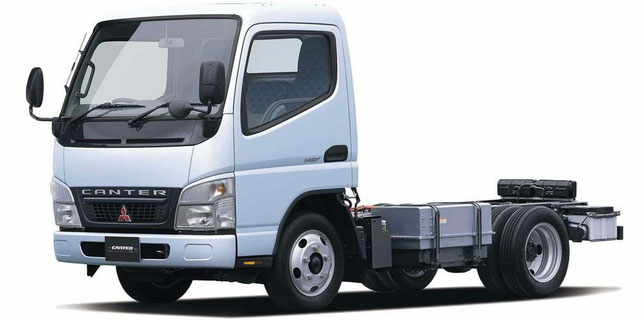
In 1963, based on the "Jupiter" series, a very elegant boneless version of the "Fuso T720" was produced, which has at present become known every bit the "Canter". During the sixties, based on these chassis, an extensive cargo program was formed, Mitsubishi, which included the 2nd generation of the Canter, the first iv-tonne bespokapotnaya model "T620" (110 hp), too equally a family of heavy vehicles "Т360", "Т390", "Т410", "Т810", "Т910 / 911" and "Т951" with lifting capacity of 3-5 tons with wheel formulas four × two, 6 × 2 (with front and rear or two forepart driven axles ) And 6 × 4 with 6 8-cylinder diesel engines (13,3-xiv,eight liters, 200-280 hp) and power steering.
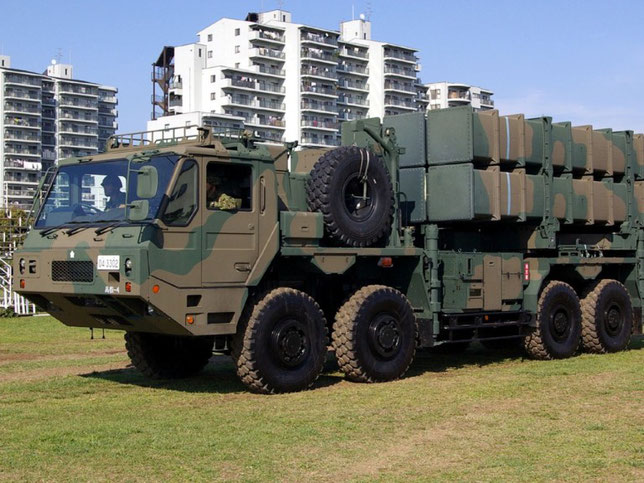
Based on 6-ton full-drive army trucks "W20", "W23" and "W27" (vi × 6) with engines with a ability of 200-280 hp. Special tractors, timber trucks, 10-ton dump trucks "W11D" and aerodrome fire trucks were produced. Since 1966, based on the "Minica" rider car model, Mitsubishi has offered its lightest eighteen-strong Minicab truck with an all-metal trunk for the local market. Two years later on, a van and a Delica pickup truck with a payload of 600 kg appeared. With engines of 53 hp, created on the aggregates of the Kolt-one thousand (Colt) rider auto and became the epitome of the modern series "L300".
The plan also included 2-axle 7-ton construction dump trucks "T-52" with a 1-seater cabin, multi-seat buses and trolleybuses. By the end of the 1960s, the Mitsubishi business organization took the first place in Nihon in the production of trucks. In April 1970, based on the partitioning of Mitsubishi Heavy Industries, an independent automobile company, Mitsubishi Motors Corporation, was established, but in May of the following year, the United states Chrysler bought out xv% of its shares. In 1973, its share increased to 35%. This immune u.s.a. to modernize the entire plan and enter new markets.
The master events of those years are the introduction in 1972 of the heavy series "T813" with the new diesel V10 and the tertiary generation of the Kanther range in 1973. Simultaneously, the formation of a new series of "F" with a cabin over the engine, which is however manufactured at the Kawasaki plant almost Tokyo, began. By 1982, it included hundreds of variants of unified trucks and truck tractors of the FK, FM, FP, FR, FS, FT, FU, FV and FW models with Wheeled formulas from 4 × 2 to 8 × four with in-line vi-cylinder naturally aspirated diesel engines (6557-11945 cm3, 160-240 hp) or a straight injection V8 engine (16031 cm3, 320 hp), 5 , 6 or 10-step gearboxes, 2-circuit hydropneumatic brake actuator and spring suspension.
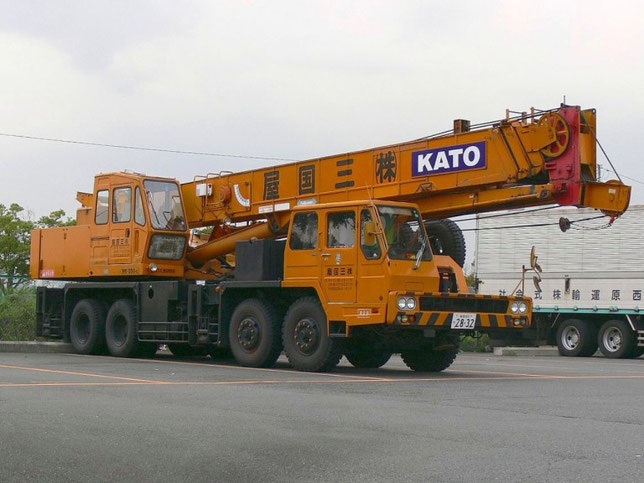
The hood series consisted of dump trucks and timber carriers "NV" (6 × iv) and "NW" (half-dozen × vi) with a total mass of 25.v tons (as part of a road railroad train - up to 44 tons) with a new diesel V8 (14886 cm3, 285-305 liters .s.) And a 12-speed gearbox. In the 70-ies. A large batch of such cars was delivered to the timber enterprises of the Soviet Far East. Since 1976, the production of crane chassis began, the carrying capacity of which past 1981 reached 150 tons (4-beam model "K1302"). In 1978, the 4th generation of Canter and the pocket-sized FE serial began, and in 1981 the lightest 1.5 ton Kanter 15 model. The proper noun "Fuso" was used simply on machines destined for the Japanese market.
By the 70-ies. Is too the outset of mass production of low-cal trucks Mitsubishi. In 1978, the product of choice-up trucks L200, known in Japan as Strada, began at the Nagoya plant using Lancer car units. From next twelvemonth, pickups were sold in the U.s. through Chrysler'south trade network under the brands "Dodge D50" and "Plymouth Pointer", and since 1980 they have been offered 4x4 versions. In 1979, there appeared vans of the "L300" series, which for Japan retained the former proper noun "Delica". Since 1982 they were offered in version iv × 4, and in four years their 2d generation followed.
Machines were produced with engines with a capacity of 75-100 hp, with a body-van capacity of upwardly to 10 m3 or a platform with a carrying chapters of 1.4 tons. In 1982, the release of universal passenger and rider cars Pajero four × 4, known in several countries every bit Montero and Shogun, began. Since 1984, a new generation of the smallest in the plan visitor "Mini" auto carrying capacity of 350 kg was offered. With a wheelbase of but 2200 mm., Produced at a new plant in Mizushima. A year afterwards, the production of the 5th family unit of Canter and the new export model FH with a full mass of 7.v-10 tons started, which received a diesel with a turbo-supercharging of 145 horsepower.
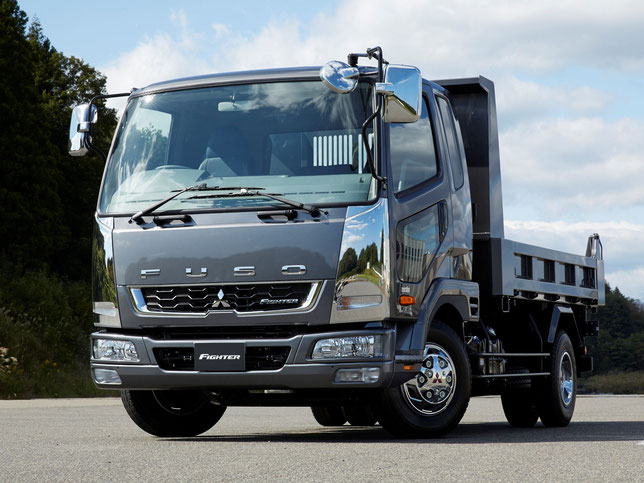
In 1983, the radical modification of the "F" series was made, which received a safer, more comfortable and rigorous cab over the engine. Since so, there has been a clear separation of trucks for sale on the domestic and strange markets. They differed in designation, load-carrying capacity, full weight, safety factor, technical level, cab condolement and appearance. The models begetting the consign name "Kanter" in Nihon were designated "Fighter Minion" (Fighter Minion), and medium and heavy machines of the "F" series were called "Fighter" and "The Bang-up".
On April 15, 1985, an agreement was signed with the Chrysler concern on the establishment of a articulation venture in the United States, which entered service the next year. Past that time, assembly plants of the Mitsubishi concern had already worked in Republic of korea, Thailand, India, Malaysia, New Zealand, and the Philippines. In the late 80'southward, the visitor "Mitsubishi" produced annually upwards to 600 chiliad trucks, which were exported to 160 countries. In 1988, 47,000 lorries with a gross tonnage of more than 6 tons were manufactured, including 24525 lorries, more than 15 tons (ninth in the world). In 1993 and 1999, the 8th and ninth generation of the Minicab Van and Minicab Truck vans with a gross mass of 1180 kg began to be produced. With a iii-cylinder gasoline engine (657 cm3, 48 hp), a manual or automatic transmission.
Their length was 3.three m, the maximum speed is 100 km / h. Only for export are cargo variants of i-volume cargo-passenger vehicles "Space Runner" and "Space Vagon" (Space Wagon) with two-liter petrol and diesel fuel engines (82-133 hp), developing speed ISO -185 km / h. Light "Pajero" new generation with engines with a chapters of 92-153 hp. They are produced in the grade of vans and are capable of towing trailers weighing up to 3.3 tons. Production of L200 pick-upward trucks with a total weight of 2.4-two.eight tons (4 × 2/iv × 4) is established in Thailand, where since 1996 they take been manufactured with an updated advent, a new turbocharged and intercooled turbocharged diesel engine (2477 cm3 , 100 hp), a 10-speed box, a front independent suspension and iii types of cabs.
In the early 90s, the L300 series in Western Europe was offered in the performance of TranCity with gasoline or diesel engines with a power of lxx-116 hp. And power steering. Similar to her "Delica" with a total mass of 2.2-two.6 tons in Japan is produced with engines of 79-90 hp, a mechanical 5-speed or automatic 4-speed gearbox. In late 1996, they were replaced by a new series of light wagons "L400" (in Japan - "Delica Cargo") with a full mass of ii.five-two.7 tons with engines of 100-106 hp.
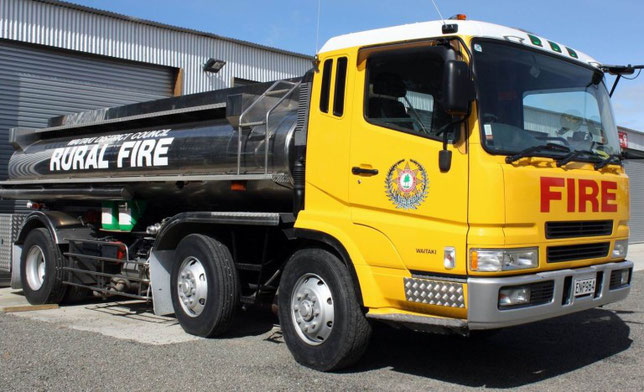
Since 1993, the sixth generation of Amble has been produced with a more than streamlined and comfortable cabin, including FB, FC, FE 4x2 and FG 4x4 models with a full mass of 3.4-6 , 3 tons, which are offered in a variety of options with engines with a capacity of 75-155 horses. In Western Europe, the "FB" and "Fe" models are normally referred to as "Canter 35" or "Metropolis Amble", and the "Fe" and "FH" variants with a total mass of v.4-nine.9 tons are referred to as " Distri Amble. They are also collected past Mitsubishi subsidiaries in Portugal, Belgium and India. In Nihon, the lightest range of Canter, with a carrying chapters of i-i.5 tons, with a 2.8-liter 94-horsepower diesel fuel engine, is chosen Tate (Guts).
Variants "Fuso Fighter Mignon Ii" for Japan with a capacity of 4 - 7 tons have 210-strong diesel, front end independent break and disc brakes with ABS, wheelbase from 2.five to 7.2 meters. Until the terminate of the 20th century, most 1.5 1000000 machines of the Kanter series were manufactured. Since 1992, the updated consign models of the middle class "FK", "FL" and "FM" with a full mass of viii-17.vii tons are equipped with half dozen-cylinder diesel engines without supercharging (b, 6-7.v liters, 160-190 liters .с.), 5-step gearboxes, tires in the size from 16 to 24 inches. A similar series of "Fuso Fighter" with a conveying capacity of three.5-ten.8 tons is offered in Japan with 4 and 6-cylinder turbocharged engines (4899-8201 cm3, 180-270 hp) and a 6-speed The box.
Since 1996, the heaviest cars in Japan have received the proper noun "Fuso Super Cracking" (Super Great). They constitute a new unified family with a carrying capacity of 7.1-sixteen.one tons and a full weight of 15.8-25 tons, which includes the series "FP" (4 × 2), "FT" and "FU" (6 × 2), "FV" and "FY" (6 × 4), "FS" (8 × 4). Cars differ cabins over the engine of the increased sizes and with the big expanse of a glass cover. They are economical and low-toxic diesel fuel engines - row 6-cylinder turbocharged and intercooled and naturally aspirated V8 and V10 (11945-25112 cm3, 310-480 hp), mechanical gearboxes with a number of steps from 6 to 16, bound Or pneumatic suspension with electronic control.
For the showtime time for Japanese heavy vehicles, they are equipped with front end air bags, navigation systems and radar devices. Until now, the product of a heavy-duty hooded series "NW" is continuing to work on the ground and as role of road trains weighing up to 140 tons. The "Mitsubisi" cargo programme is closed with low-frame chassis of half-dozen × 4 and eight × four with engines of 240-355 horses for cranes with a carrying capacity of 20-fifty tons. At the terminate of the 20th century, the Mitsubishi Corporation owned 9 plants and ii research centers in Japan, employing 28,400 people.
The production of trucks and all units for them is carried out on three main robotic enterprises with a full area of over 300,000 m2, where four,000 people work. Assembling companies and subsidiaries of Mitsubishi are located in 27 countries of the world. In 1999, all of them produced over 500,000 dissimilar trucks and buses, including 53,300 cars weighing more than than 6 tons, which corresponds to the third place in Japan and the 13th in the globe. On March 27, 2000, an understanding was signed with the Daimler-Chrysler business organisation, to which 34% of Mitsubishi'south shares were transferred. In 2002, the production of an updated Mitsubishi KANTER car in Nippon is launched. The car has significantly improved characteristics of reliability, functionality, functioning in add-on to safety and comfort.
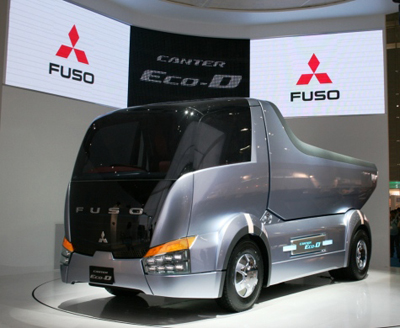
The offset of sales of the new seventh generation Mitsubishi Fuso Canter in Russia, after the formation of the joint venture FUSO KAMAZ Trucks RUS, formed inside the framework of cooperation between KamAZ and DAIMLER AG. The High german concern owns about 90% of the shares of Mitsubishi Fuso Trucks & Bus Corporation. At the moment, Mitsubishi Fuso Trucks & Jitney Corporation, existence an integral office of the Daimler business concern, is developing in the management of energy-saving technologies, in particular, by the year 2012 the appearance of a fundamentally new Mitsubishi Fuso CANTER, with a fully electric power unit, was announced. The Russian prospects of Mitsubishi Kanter for the adjacent ii years will be the transition to the Euro-4 standard.

Source: https://www.pdfmanual4trucks.com/mitsubishi/
Posted by: whitehishly.blogspot.com
0 Response to "How To Clean Vents On A 2000 C2500 Pickup Truck"
Post a Comment